
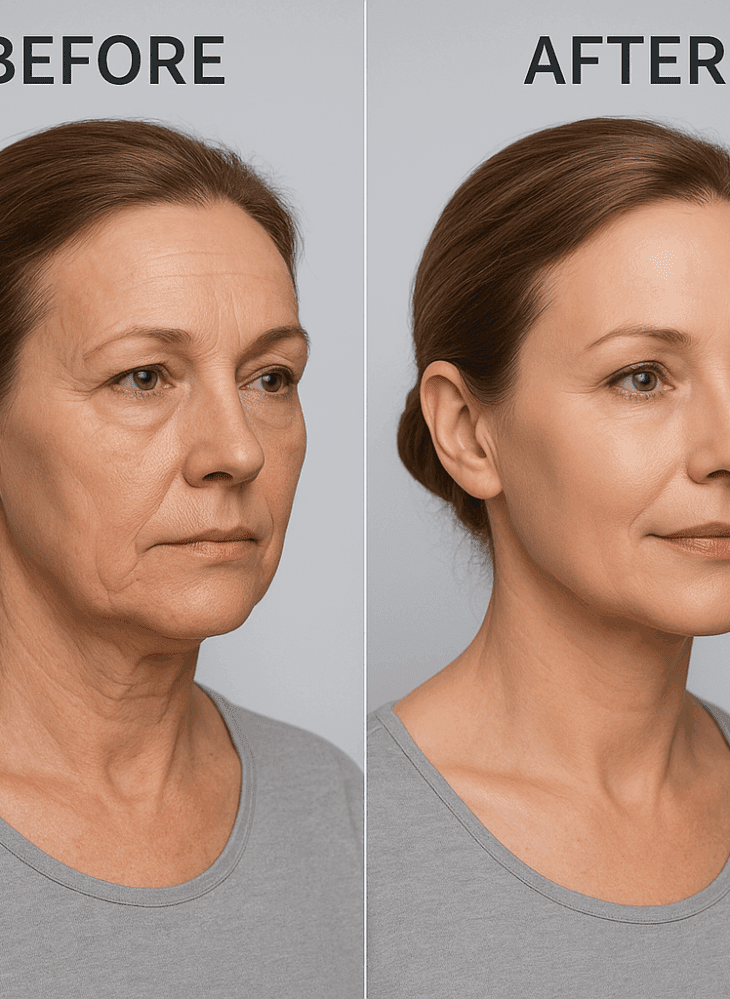
As we age, our skin begins to lose a significant portion of its elasticity and supporting fat beneath the surface, leading to visible signs of aging such as wrinkles, sagging cheeks, a drooping jawline, and loose neck skin. These changes can affect our overall appearance, making us feel older than our actual age. Therefore, many seek effective and lasting solutions, and this is where many others come in. Surgical facelift (Facelift – Rhytidectomy) As the best procedure capable of restoring youthful features in safe ways and with long-lasting results.
In this comprehensive article, you will find a detailed, scientific, and practical explanation of surgical facelifts, with clear headings, high keyword density, and SEO-optimized content to ensure excellent visibility in search results.
What is a surgical facelift?Facelift Surgery)
Surgical facelift or Rhytidectomy It is a cosmetic procedure used to tighten facial skin and deep tissues (SMAS layer) and redistribute fat under the skin, with the aim of eliminating wrinkles and sagging and improving the appearance of the jaw, neck and cheeks.
This procedure is considered one of the most requested cosmetic procedures worldwide, as it offers clear, natural and long-lasting results compared to injections, threads or non-surgical treatments.
What does a facelift include? surgical?
A facelift typically involves treating the following areas:
- The cheeks and center of the face
- Lower jaw (jawline)
- neck
- deep skin folds around the mouth
- Sagging skin resulting from weight loss or age

Why does the need for a facelift arise?
With age, a number of natural changes occur in the face, most notably:
subcutaneous fat loss
With age, fat begins to move from the middle of the face downwards, making the cheeks appear smaller and increasing sagging.
weakness of facial muscles and deep tissues
The SMAS layer, which provides the face with its basic support, loses its strength, leading to sagging facial features.
The skin gradually loses its elasticity, so wrinkles become more visible.
fat accumulation in the neck
This leads to the appearance of a "double chin" or sagging of the lower jaw.
A surgical facelift addresses all these problems at once and rearranges the features in a way that highlights youth without exaggeration.

Types of surgical facelifts
Full Facelift
It is the most comprehensive type and is used to treat severe sagging in:
- cheeks
- Jaw
- neck
- deep lines around the mouth
It is the best option for those over 45 years of age or suffering from obvious and advanced sagging.
Mini Facelift
It is also called Mid-face liftIt treats:
- lower jaw
- cheeks
- mild to moderate sagging
It is characterized by a shorter recovery time and less scarring, and is often suitable for age groups between 35 and 50 years old.
Neck lift
It focuses on the neck and jaw area and treats:
- sagging skin
- deep necklines
- Excess fat under the chin
It can be combined with a full facelift for optimal results.
Facelift with fat grafting (Fat Grafting + Facelift)
This procedure combines lifting and reshaping the face with autologous fat injections, giving very natural results and addressing the problem of “excessive lifting”.

How is a surgical facelift performed? (Steps of Facelift)
The procedure is usually performed under general or local anesthesia with a sedative, and takes between 2 and 4 hours depending on the type of tightening.
Making surgical incisions
The cracks are cleverly placed in hard-to-see areas such as:
- At the hairline
- In front of and inside the ear
- behind the ear
- Under the chin (in neck tightening)
Skin and deep tissue lifting (SMAS)
This is the most important step in the same process, where:
- Tighten loose muscles
- Repairing supporting tissues
- fat redistribution
This gives a consistent and natural result, not just a skin tightening effect.
removing excess skin
Sagging skin is removed without affecting natural features.
Sealing cracks with high precision
The stitching is done with fine cosmetic threads that prevent scarring.
Advantages of a surgical facelift
A facelift not only improves appearance, but also changes inner confidence and restores a person's youth for many years.
Key benefits:
- Complete elimination of facial and neck sagging
- Lower jaw reshaping
- Improving the shape of the cheeks
- Getting rid of deep wrinkles
- Restoring a natural, youthful appearance
- Results that last from 7 to 12 years
- It can be combined with other procedures such as eyelid lifts or fat injections.
Risks and Complications of Surgical Facelift
Like any surgical procedure, some complications may occur, but they are rare when an experienced surgeon is chosen.
Key potential risks:
- Temporary swelling and bruising
- A collection of blood under the skin (hematoma)
- infection
- temporary numbness or weakness in the facial nerves
- Minor (and often hidden) scars
- Temporary difference in sensation in the ear area
Therefore, the surgeon's instructions must be followed precisely before and after the operation.
Recovery after surgical facelift (Recovery Phase)
Recovery varies depending on the type of strain, but generally:
The first days:
- Swelling and bruising
- Feeling a slight tightness in the face
- Comfort is very important
Week 1:
- Removal of bandages and some stitches
- Bruising is noticeably reduced
Week Two:
- It is possible to return to daily life
- Improvement of 60–70% from the final form
After 4–6 weeks:
- Final result displayed
- Most of the swelling disappeared
- Natural facial features
Tips to ensure the best results for a facelift
Before the operation:
- Quit smoking for 4 weeks
- Avoid blood-thinning medications
- Perform the required tests
- Choosing a qualified plastic surgeon
After the operation:
- Elevating the head while sleeping
- Adhere to the instructions for antibiotics and painkillers.
- Avoid the sun
- Use sunscreen
- Not exercising for 4 weeks
Who is the ideal candidate for a surgical facelift?
Recommended for:
- He suffers from deep wrinkles
- He has noticeable sagging in his cheeks and jaw.
- He suffers from neck sagging
- He does not want temporary results from fillers or threads.
- He enjoys good health without any diseases that would prevent recovery.
Comparison between surgical and non-surgical facelifts
| Procedure | surgical tightening | Tighten with threads | Filler | laser |
|---|---|---|---|---|
| Duration | 7–12 years | 1–2 years | 6–12 months | 6–12 months |
| Result | Strong and clear | Medium | Improve size only | minor improvement |
| recovery | 2–4 weeks | two days | immediate | immediate |
| Suitable for all ages | +40 | 30–45 | What age? | What age? |
Summary
A surgical facelift is the ideal solution for restoring natural facial features and visibly and permanently eliminating sagging and wrinkles. Its results far surpass those of non-surgical techniques, making it the best option for those seeking a real transformation that boosts their confidence and gives them a youthful appearance for years to come.