
It is considered Cataract surgery One of the most common and successful surgical procedures in ophthalmology, especially with the significant advancements in diagnostic methods and modern equipment, is cataract surgery. Cataracts are a gradual clouding of the eye's lens, affecting the ability to see clearly. This condition usually affects older adults, but it can also occur in younger age groups due to certain diseases, injuries, or genetic factors.
The following article explains it to you Causes of cataracts, how they are diagnosed, who is a candidate for surgery, how it is performed step by step, how to prepare yourself beforehand, what to expect afterward, and the most important recommendations. Emphasizing a very important point: Choosing an ophthalmologist specializing in cataract surgery and lens implantation Because ophthalmology has many subspecialties, and each specialty has its own tools and expertise.
What is a cataract?

A cataract is a gradual clouding of the eye's natural lens, which focuses light onto the retina. When the lens becomes cloudy, light enters in a scattered manner, causing:
- Blurred vision.
- Continuous fog.
- Severe weakness in reading.
- Difficulty driving, especially at night.
- Extreme sensitivity to strong light.
Over time, if left untreated, it can lead to severe vision impairment to the point of affecting daily life.
People for whom cataract surgery is recommended
Cataract surgery is the only effective treatment to remove the cloudiness and restore vision. The surgery is usually required if:
- The person's eyesight was greatly affected.
- The patient began experiencing constant confusion during the day.
- He found it difficult to drive or he saw halos around the lights.
- Reading has become a daily problem.
- The colors became weak and he started to see them as faded.
- Daily activities such as walking or climbing stairs have become more difficult.
People most at risk of infection:
- Older people (most common cause).
- Diabetic patients.
- People who suffered a direct eye injury.
- People who take cortisone for long periods.
- Genetic factors.
- Children are born with congenital cataracts, which are rare but do exist.
How is cataracts diagnosed?
The diagnosis is simple and quick, but it requires Specialist doctor To ensure an accurate diagnosis, the following tests are conducted:
- Visual acuity test
To determine the degree of vision impairment. - Slit lamp inspection
It is the most important test for assessing lens clarity and determining the location and severity of opacity. - Retinal examination
Essential for assessing the health of the eye from the inside, especially in diabetic patients. - Eye pressure measurement
To ensure there are no accompanying problems such as high eye pressure or glaucoma.
Choosing the right doctor is important because there is a difference between a general ophthalmologist and a specialist. Specialist in cataract and lens surgeryThis precise specialization greatly affects the success of the operation.
Preparing for the operation – what should you do before surgery?
The preparation is done in several steps to ensure the process is safe and successful:
- Complete eye examination To determine the location and intensity of the opacity.
- Lens measurement test (Biometry) It is a precise measurement that determines the appropriate power of the artificial lens for implantation.
- Review your medications with your doctor, especially blood thinning medications.
- Use drops prescribed by the doctor before the procedure.
- Fasting from food and drink for several hours before the operation if you are asked to do so.
- Arranging with a family member will get you there and back on the day of the operation.
These facilities ensure that the process goes smoothly and without any complications.
How is cataract surgery performed?
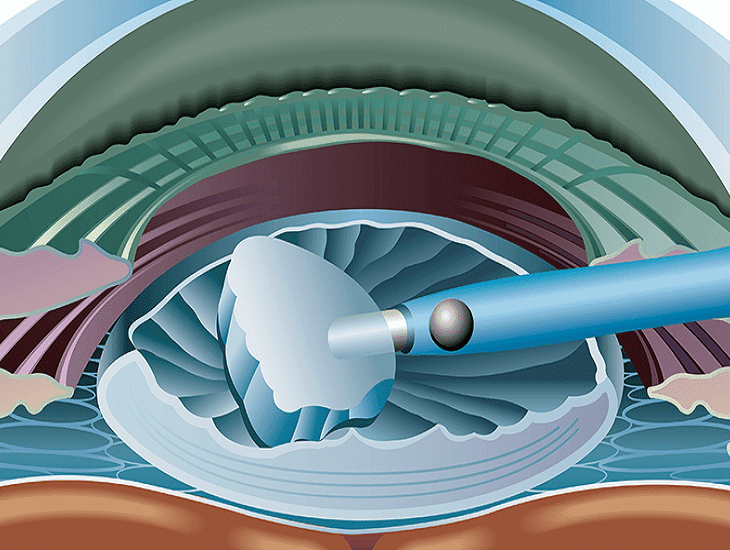
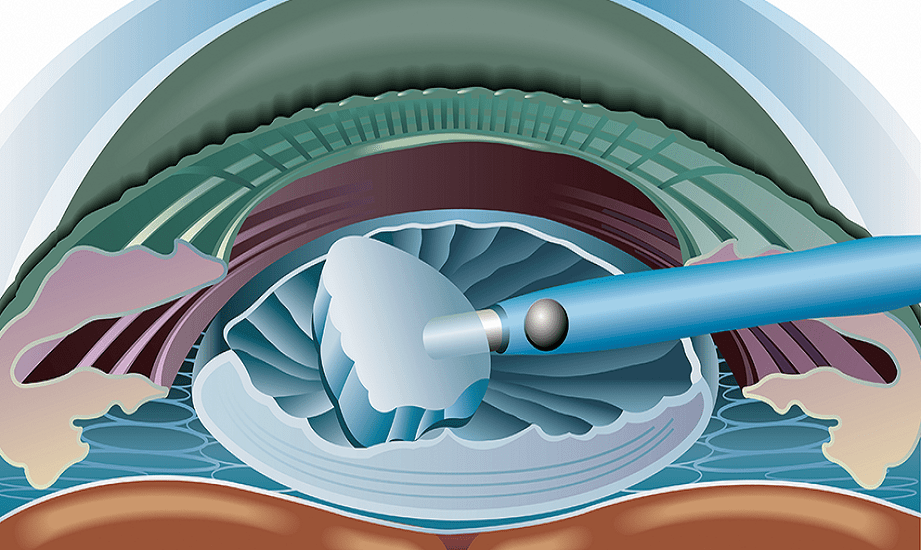
Cataract surgery is considered today to be Faster and safer operations Thanks to technological advancements in phacoemulsification equipment, the basic steps of the procedure are:
- Local anesthesia
Either with drops or a simple injection, and the patient remains awake and feels no pain. - Making a very small incision in the cornea (2–3 mm)
This tear is so small that it doesn't need stitching. - Breaking up a cloudy lens using phacoemulsification
The device vibrates at high speed and breaks the lens into small pieces. - Suctioning the fragmented lens
So that the transparent wallet remains inside the eye. - Implanting a new artificial lens
A permanent lens that does not change and lasts for a lifetime. - The wound closes automatically.
Because the hole is very small and heals on its own.
The whole process takes Only 10 to 20 minutesThe patient can return home on the same day.
After the operation – what to expect and how to take care of your eye?
After surgery, blurred vision may occur for hours or a day; this is normal. For faster improvement:
- Use the drops as prescribed by the doctor (anti-inflammatory + antibiotic + dilator).
- Avoid rubbing or touching your eyes directly.
- Wear eye protection for the first few days while sleeping.
- Do not lift heavy weights or exert strenuous effort for a week.
- Avoid swimming for two weeks.
- Avoid exposure to dust and polluted areas.
- See the doctor at the scheduled appointments.
With adherence, most patients notice a significant improvement within two to four days, and their vision reaches final stability within a few weeks.
Why should you choose a doctor specializing in cataract surgery?
Ophthalmology has more than 10 subspecialties, such as:
- Retinal surgery.
- The cornea.
- Eye nerves.
- Children's eyes.
- Cosmetic eye surgeries.
- Cataracts and lens implantation.
Cataract surgery is very delicate, and choosing the right lens and performing the procedure correctly directly affects vision quality for many years. Therefore The procedure must be performed by a surgeon specializing in phacoemulsification and lens implantation.Not at any general ophthalmologist.
Frequently asked questions about cataract surgery
1. What is cataract surgery?
It is a simple surgical procedure in which the opaque lens inside the eye is removed and replaced with a transparent artificial lens that helps restore clear vision.
2. Is cataract surgery painful?
No, because it is usually performed under local anesthesia using drops or a simple injection. Most patients do not feel any pain during the surgery.
3. How long does cataract surgery take?
The process is very short and ranges between 10 to 20 minutes That's all, and then the patient goes home the same day.
4. When will my vision improve after the operation?
Most patients notice an improvement in their vision within one to three daysHowever, complete visual stability may require 2–6 weeks Depending on the speed of eye healing and the condition of each patient.
5. Are there any risks associated with cataract surgery?
The success rate of cataract surgery is very high, and complications are rare. The most important thing is choosing the right ophthalmologist. Specialist in phacoemulsification surgery and lens implantation To reduce the risk level.
6. Can cataracts recur after surgery?
The cataract itself doesn't recur because it was completely removed. However, it's possible that it might after months or years. Slight opacity on the back of the wallet For the lens, it is treated within minutes with a simple laser called the YAG Laser without surgery.
7. Will I need glasses after the operation?
This depends on the type of implanted lens:
- Single-focal lenses: You may need reading glasses.
- Multifocal lens: Reduces the need for glasses for most everyday activities.
The specialist doctor will help you choose the most suitable lens.
8. Can the operation be performed on both eyes on the same day?
Usually, each eye is operated on separately to ensure the highest degree of safety, but in certain centers and in specific cases, both operations may be performed on the same day, depending on the doctor's assessment.
9. Can I drive a car after the operation?
Waiting is usually advised Two to three days Or until the doctor allows driving after the first check-up.
10. Can diabetic patients undergo cataract surgery?
Yes, but blood sugar levels must be controlled and the retina examined before the procedure. Patients with diabetic retinopathy require close monitoring. An ophthalmologist specializing in retina in addition to a cataract specialist.
11. When can I return to work?
Most patients return to work within 3–5 days Unless the work is physically strenuous. Strenuous work requires a longer recovery period as advised by the doctor.
12. Can the phone be used after the operation?
Yes, but it is preferable to use it lightly for the first two days to avoid dry eyes and strain.
13. Can I exercise after cataract surgery?
Walking is allowed from day one, but strenuous sports or weightlifting require Two to four weeks Before returning to it.
14. Can I take a shower after the operation?
Yes, but it must Prevent water or shampoo from entering the eyes. The first week.
15. Who should I go to if I decide to have the operation?
to An ophthalmologist specializing in cataract surgery and lens implantation.Because ophthalmology has many subspecialties, and the success of the operation depends largely on the surgeon’s experience and the accuracy of choosing the appropriate type of lens.