
It is hernia One of the most common surgical conditions, a hernia occurs when part of internal tissue—such as the intestine or fat—protrudes through a weak point in the wall of the muscle or surrounding tissue. Hernias can occur in children or adults and can range from simple to severe, becoming a medical emergency if strangulation or obstruction occurs.
First: What is a hernia?
A hernia is an abnormal protrusion of tissue from inside the body through a weak spot in the muscles. It often appears as a bulge that may increase in size when standing or coughing, and disappear or decrease when lying down.
Causes of hernias
There are several factors that increase the likelihood of developing a hernia, including:
- congenital weakness in the abdominal wall
- Obesity
- Frequent pregnancy
- Carrying heavy weights
- chronic cough
- chronic constipation
- Previous surgical procedures
Types of hernias
1. Inguinal Hernia
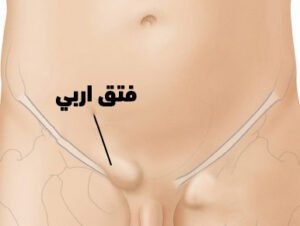
The most common type of hernia, it appears in the groin area above the thigh. It is more prevalent in men.
Symptoms: Swelling in the groin area, pain that increases with standing or coughing.
2. Femoral Hernia
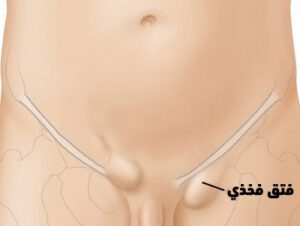
Less common than inguinal candidiasis, it appears below the groin area near the thigh. It is more common in women.
It is characterized by a higher risk of suffocation.
3. Umbilical Hernia

It occurs around the navel, is frequently seen in children and may disappear spontaneously, while in adults it usually requires surgery.
Common symptoms of a hernia
- Appearance of a noticeable swelling or protrusion
- Pain or a feeling of heaviness
- Increased pain with exertion or coughing
In severe cases: severe pain, redness, nausea, vomiting — this may indicate strangulation of hernia It requires immediate intervention.
Diagnosis of a hernia
It depends mainly on:
- clinical examination
- Ultrasound imaging
- CT scans are sometimes used to determine the size and complications.
Methods of treating hernias
First: Non-surgical treatment
It is not considered a permanent treatment, but it is used temporarily in some cases:
- hernia beltsIt may alleviate the symptoms but does not treat the underlying cause.
- Mitigating the causative factorsWeight loss, treatment of chronic cough, avoiding lifting heavy weights.
Note: The radical treatment for a hernia is surgery.
Second: Surgical treatment (the definitive treatment)
Surgery is the optimal and definitive treatment for a hernia, aiming to reposition the tissues and strengthen the weakened area. This includes:
1. Traditional surgery (Open Surgery)
In this procedure, the skin in the hernia area is opened and the muscle wall is repaired using sutures or mesh.
2. Laparoscopic Surgery
It is performed through small holes using precision instruments, and is characterized by:
- Less pain after the operation
- A faster return to normal life
- small scar
3. Using Mesh Repair
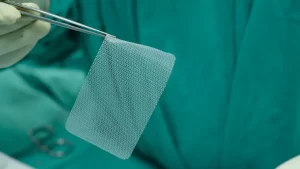
The most effective modern methods for strengthening the abdominal wall and preventing the recurrence of a hernia.
When should I review? doctor immediately?
- Sudden severe pain
- Swelling that does not return to its normal shape
- Redness or heat at the site of the hernia
- Severe vomiting or symptoms of obstruction
These signs may indicate strangulation of hernia This is an emergency situation that requires immediate intervention to prevent loss of blood supply to the intestines.
Summary
A hernia is a common condition that can affect people of all ages, and it usually results from a weakness in the muscular wall. The types vary depending on the location, and the best permanent treatment is surgery—either traditional or laparoscopic—with early diagnosis being crucial to avoid complications. Medical follow-up is essential, especially if there is severe pain or other alarming symptoms.
These signs indicate strangulation of hernia This is an emergency situation that requires immediate intervention to prevent loss of blood supply to the intestines.
Average cost of hernia surgery in Jordan:
Generally, the cost of hernia surgery varies depending on several factors, most notably the surgeon's experience, the hospital where the operation will be performed, the type of hernia, its size and location, and whether or not a support mesh is needed. However, the typical price range can be summarized as follows:
1. Traditional hernia surgery (surgical incision):
The cost typically ranges between 500 to 900 Jordanian dinarsThis depends on the size of the hernia, its location, and the nature of the materials used during the repair, such as mesh.
2. Laparoscopic hernia surgery:
The cost ranges between 800 to 1500 Jordanian dinarsThis is also related to the size of the hernia, its location, and the type of mesh or surgical instruments used.