
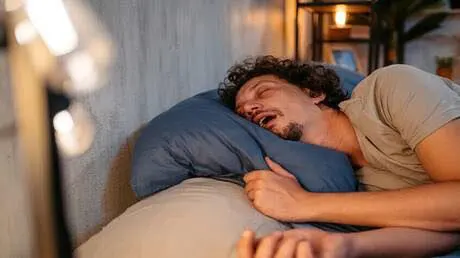
A comprehensive guide to treating snoring: from the first visit to a pulmonologist to definitive surgical solutions
Note to the reader: Are you tired of waking up feeling exhausted? Does your snoring affect your partner's quality of life? You're not alone. This comprehensive guide from JOMEDIX It's your comprehensive roadmap to restoring restful sleep and your physical and mental well-being. We'll cover everything you need to know about the causes of snoring and its treatment in a professional and scientific manner.
It is Snoring A health problem that plagues millions of people worldwide, snoring not only affects the sleep quality of the affected individual but also impacts their partner and other family members. Far from being merely a noise nuisance, snoring can be an indicator of a more serious health condition known as... Obstructive Sleep Apnea (OSA)This requires immediate medical attention. In this in-depth guide, we'll delve into the details of snoring and its causes, and highlight the correct path to diagnosis, starting with a visit. Chest doctorBy way of procedure Integrated Sleep StudyThis leads to exploring all available treatment options, whether they are prescribed drug interventions or surgical solutions offered by specialists. Ear, Nose and Throat.
Part One: The Journey to Accurate Diagnosis (Starting with a Pulmonologist)
Some may be surprised to learn that the first step in dealing with snoring is not necessarily a direct visit to an ENT doctor; rather, the optimal approach usually begins with... Chest doctor. Why? Because snoring is often one of the main symptoms of sleep-disordered breathing, most notably obstructive sleep apnea, which are conditions that fall within the scope of a pulmonologist's specialty.
1. Why is a pulmonologist the starting point?
Enjoy Chest doctor With extensive experience in respiratory and lung diseases, he is best equipped to assess breathing functions during sleep. His primary role is to determine whether snoring is simply a minor vocal problem caused by tissue vibration, or whether it indicates a more serious condition involving repeated pauses in breathing andoxygen deficiencyWhich can lead to serious long-term health consequences such as cardiovascular disease, high blood pressure and diabetes.
- Overall assessment: The pulmonologist will perform a thorough physical examination, listen to your medical history, and ask you about your sleeping habits and any other symptoms that may be related to snoring, such as excessive daytime fatigue, morning headaches, or difficulty concentrating.
- Requesting specialized tests: The next and most important step is to request Sleep study (Polysomnography).
2. Sleep study (polysomnography): The laboratory that reveals the hidden

A sleep study (polysomnography) is the gold standard for diagnosing sleep disorders, and provides a comprehensive picture of your breathing and sleep health.
It is Sleep study (polysomnography) or Sleep plan It is the most accurate and comprehensive test for diagnosing sleep disorders, including obstructive sleep apnea and snoring. This procedure is usually performed in a specialized sleep laboratory under the supervision of specialists. During a full night in the laboratory, the patient is connected to multiple sensors to monitor a wide range of vital functions:
- Heart rate (ECG): To measure the electrical activity of the heart.
- Blood oxygen levels (oximetry): To identify any decrease in oxygen levels as a result of breathing cessations.
- Chest and abdomen movements: To monitor breathing efforts and determine if there are attempts to breathe without air passing through.
- Brain activity (EEG): To determine the different stages of sleep (light sleep, deep sleep, rapid eye movement sleep REM) and the effect of breathing disorders on them.
- Leg movements (EMG): To detect any involuntary movements that may disrupt sleep.
- Airflow through the nose and mouth: To measure the amount of air that enters and leaves the lungs.
- Recording snoring: To determine the severity of snoring and how often it occurs.
Analyzing the results of a sleep study provides the doctor with a clear and comprehensive picture of your sleep and breathing patterns, enabling him to make an accurate diagnosis and recommend the most appropriate treatment.
Part Two: The Scientific Reasons Behind Tissue Vibration Leading to Snoring
To understand how to treat snoring, we must first understand its mechanism. Snoring occurs when there is a partial obstruction in the upper airways during sleep. As air passes through this narrow passage, it causes the soft tissues in the throat (such as the uvula, soft palate, and base of the tongue) to vibrate, producing the characteristic snoring sound. The narrower the passage, the more the tissues vibrate, and the louder the snoring.
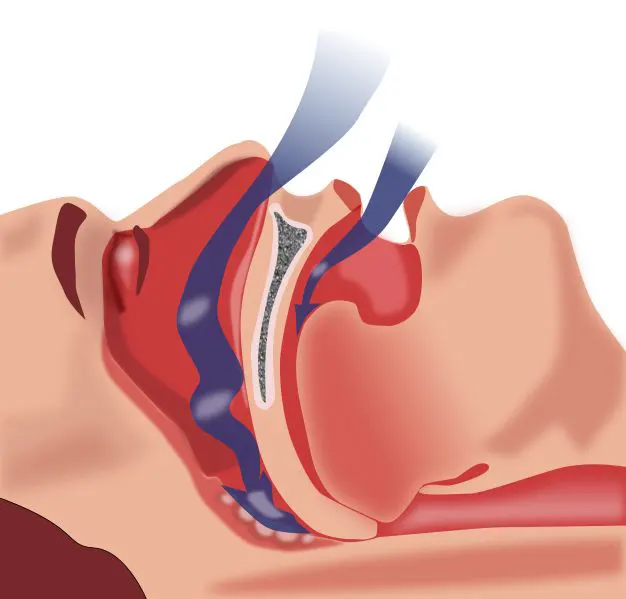
Partial obstruction of the upper airways is the main cause of tissue vibration and the occurrence of the snoring sound.
List of common reasons that increase the likelihood of snoring:
- Obesity: The accumulation of fat around the neck and throat compresses and narrows the airway, increasing the likelihood of snoring and sleep apnea.
- Congenital anatomy or structural changes:
- Enlarged tonsils or adenoids: Common among both children and adults.
- Length of the soft palate or uvula: It increases the volume of tissue that can vibrate.
- Small or receding lower jaw: It can push the base of the tongue backward and obstruct the airway.
- Deviated septum: It obstructs the flow of air through the nose.
- Enlargement of the nasal turbinates: It can cause nasal congestion.
- Vital habits and lifestyle:
- Smoking: It irritates the mucous membranes in the throat and nose, causing inflammation and swelling and increasing congestion.
- Consuming alcohol and sedatives: It relaxes the throat muscles, making them more prone to closing during sleep.
- Sleeping position: Sleeping on your back causes the tongue to relax and fall backwards, obstructing the airway.
- Chronic nasal congestion: Due to allergies, colds, or sinusitis, a person is forced to breathe through their mouth and snoring increases.
- the age: With age, the throat muscles lose their elasticity and become more prone to relaxation and vibration.
- Gender: Men are more likely to snore than women, although women become more likely to snore after menopause.
Part Three: Non-Surgical Treatment Options (Medications and Devices)
Based on the results of a sleep study and the diagnosis of a pulmonologist, the treatment phase begins. Doctors often start with non-surgical solutions, which have proven highly effective in most cases, especially those related to obstructive sleep apnea.
1. Continuous Positive Airway Pressure (CPAP) Devices: The Gold Solution
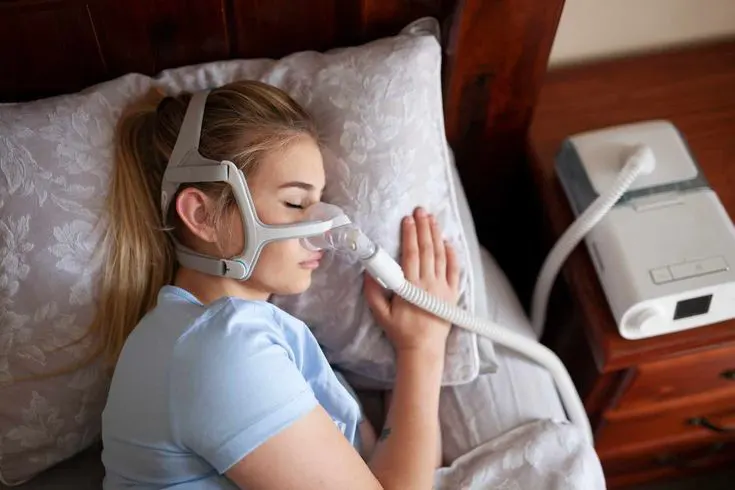
The CPAP device is the most effective treatment for severe and moderate obstructive sleep apnea.
The device is considered CPAP (Continuous Positive Airway Pressure) The most effective and common treatment for patients obstructive sleep apnea Moderate to severe. The device works by delivering a continuous stream of pressurized air through a mask worn by the patient while sleeping. This positive pressure acts as an "air support," opening the airway and preventing its obstruction, allowing for smooth airflow and stopping snoring and pauses in breathing.
- Types: There are different types of CPAP devices, including Auto-CPAP which automatically adjusts the pressure, and BiPAP which provides two different pressures (for inhalation and exhalation).
- Commitment: Adhering to the CPAP machine's regular use as directed by your doctor is key to successful treatment. It may take some time to adjust to the mask and machine, but the health benefits are well worth the effort.
2. Oral Appliances
These devices, custom-designed by a sleep dentist, work by repositioning the lower jaw or tongue to prevent airway obstruction. They are typically used for mild snoring or mild to moderate obstructive sleep apnea, or as an alternative for patients who cannot tolerate a CPAP machine.
- Mandibular Advancement Devices (MADs): The lower jaw and tongue are pushed forward slightly.
- Tongue Retaining Devices (TRDs): It holds the tongue in place to prevent it from falling backward.
3. Prescribed drug treatments (for specific reasons)
There are no “direct” medications to treat snoring itself, but a pulmonologist can prescribe some medications to treat the underlying conditions that contribute to snoring:
- Nasal steroid sprays: To treat allergic rhinitis or sinusitis that causes nasal congestion and blockage.
- Antihistamines and decongestants: It can be used for a short period to relieve congestion, but long-term use is not recommended.
- Bronchodilators: If there is narrowing of the airways, it contributes to breathing problems.
| Type of treatment | Target group | Effectiveness | comments |
|---|---|---|---|
| CPAP device | Patients with moderate to severe apnea | Very high (gold standard) | It requires commitment and regular use. |
| oral appliances | Simple snoring, mild to moderate sleep apnea | Medium to high | It is detailed by a specialist dentist. |
| Nasal steroid sprays | Snoring caused by allergies or nasal congestion | Moderate (to treat the underlying cause) | It should be used under medical supervision. |
| Nasal dilators (adhesive strips) | Snoring caused by simple nasal obstruction | Low to moderate (temporary) | A temporary solution may not address the root cause. |
Part Four: Surgical Intervention (The Role of ENT Surgeons)
In cases where non-surgical solutions are ineffective, or when there is a clear structural problem obstructing breathing, ENT specialists come into play. The aim of these surgeries is to remove the obstruction or permanently widen the airways.
1. Nose surgeries to improve airflow
If nasal obstruction is the primary cause of snoring, surgical intervention can make a significant difference:
- Septoplasty (correction of the nasal septum): The surgeon corrects the deviated nasal septum that obstructs airflow, significantly improving breathing through the nose.
- Nasal turbinate reduction: The turbinates are structures inside the nose that can enlarge (due to allergies or other factors) and obstruct breathing. They are reduced in size using laser, radiofrequency, or partial ablation to improve airway flow.
- Polyp removal: If there are polyps blocking the nasal passages.
2. Throat and pharynx surgeries to treat snoring
These surgeries target the soft tissues in the throat and pharynx that vibrate or obstruct the airway:
- Uvulopalatopharyngoplasty (UPPP) procedure:
This procedure is one of the most common surgeries for treating snoring and sleep apnea. It involves removing the excess uvula, part of the soft palate, and sometimes the tonsils and adenoids. The goal is to widen the airway at the back of the throat. Although effective, it can have a painful recovery period.
- Radiofrequency Ablation (RFAblation):
This technique is used to shrink and tighten the soft palate or base of the tongue. The surgeon inserts a thin needle that delivers radiofrequency energy to the tissue, creating tiny internal scars that tighten the tissue and prevent it from wobbling. It is a less invasive procedure than UPPP and has a shorter recovery time.
- Palate implants:
Small supports (usually three) are implanted in the soft palate to make it more rigid and prevent it from vibrating. This technique is suitable for mild to moderate snoring and not for severe sleep apnea.
- Tongue base surgery:
If the base of the tongue is the primary cause of the obstruction, surgery can be performed to reduce its size or reposition it. Examples include radiofrequency ablation of the tongue base or using certain techniques to advance the hyoid bone.
- Maxillomandibular Advancement (MMA):
This surgery is considered the most invasive and effective for severe obstructive sleep apnea that does not respond to other treatments. It involves advancing the upper and lower jaws, resulting in a complete expansion of the upper airway. This procedure is performed by maxillofacial surgeons.
Part Five: Life Tips from JOMEDIX Experts for a Peaceful Sleep
in JOMEDIXWe believe that effective treatment requires a holistic approach combining medical intervention and lifestyle changes. Here are some golden tips that can help reduce snoring and improve your sleep quality, whether you're undergoing treatment or looking for initial solutions:
JOMEDIX's top tips for a restful sleep:
- Changing your sleeping position: Sleeping on your side significantly reduces snoring compared to sleeping on your back, as it helps prevent the tongue and soft palate from falling back and obstructing the airway. Special pillows or even a tennis ball sewn into the back of pajamas can be used to encourage side sleeping.
- Losing excess weight: If you are obese, losing just 10% of body weight can significantly reduce snoring and even eliminate obstructive sleep apnea in some cases. Excess fat around the neck and throat increases pressure on the airway.
- Avoid alcohol and sedatives before bedtime: These substances relax the throat muscles, increasing the likelihood of airway obstruction and snoring. It's best to avoid them at least 4-6 hours before bedtime.
- Quitting smoking: Smoking irritates the mucous membranes of the respiratory system, causing inflammation and swelling, which narrows the airways and contributes to snoring. Quitting smoking will improve lung health and reduce snoring.
- Keeping nasal passages clean: Nasal congestion from allergies, colds, or sinusitis can worsen snoring. Use saline nasal sprays or medications prescribed by your doctor to keep your nose clear.
- Adequate hydration: Dry throat and mucous membranes can increase tissue vibration. Drink plenty of water throughout the day, and use a humidifier in your bedroom if the air is dry.
- Regular sleep routine: Going to bed and waking up at the same time every day helps regulate the body's biological clock and improves overall sleep quality.
- Raise the head of the bed slightly: Raising the top of the bed by a few inches (using blocks under the front legs of the bed) can help open up the airway.
- Breathing pauses that your partner notices while you sleep.
- Waking up feeling suffocated or gasping for air.
- Extreme lethargy and irresistible drowsiness during the day.
- Chronic headache upon waking up in the morning.
- Difficulty concentrating and severe mood swings.
Conclusion: Don't leave your health to chance, get your sleep back today!
At the end of this comprehensive guide, we emphasize that Snoring treatment It's not just a luxury or a way to block out noise; it's a vital step to protect your heart and mind and ensure a long and healthy life. The journey begins with recognizing the problem and ends with implementing the right treatment under supervision. Chest doctor or Ear, Nose and Throat Surgeon.
Remember that every night you spend snoring or experiencing sleep apnea is a night your body loses a chance to recover and rebuild. Modern science has provided us with amazing technological and medical solutions, including devices CPAP Advanced to laser and radiofrequency microsurgery.
Are you ready for a peaceful night's sleep?
We are in JOMEDIX We're here to support you every step of the way. Whether you're looking for technical advice on sleep devices or want to learn more about the latest therapy technologies.
Contact JOMEDIX experts now