
The Complete Guide to Lipedema (Fatidema): Understanding the Symptoms, Stages, and Specialized Treatment Options 

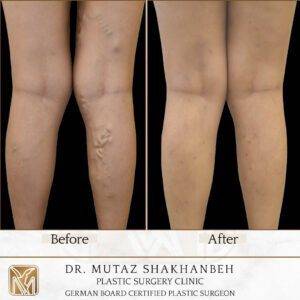
It is Lepidium (Lipedema)or what is known in Arabic as lipedemaObesity is a chronic and advanced medical condition that is often misdiagnosed as simple obesity or overweight. This misdiagnosis frequently leads to significant delays in initiating appropriate treatment.
Lipedema is characterized by the abnormal and painful accumulation of fat under the skin, mainly concentrated in the lower part of the body, such as buttocks, thighs, and legs. In some cases, it may extend to include the arms as well. The distinguishing feature of lipedema from ordinary obesity is that the accumulation of fat is **consistent and symmetrical** on both sides of the body, and is often accompanied by **relatively painless swelling** in the early stages, but it develops to become **painful to the touch** in later stages.
This condition affects almost exclusively women, and evidence strongly suggests that lipedema is closely linked to female hormones, with symptoms often worsening or appearing during major hormonal changes in a woman's life, such as puberty, pregnancy, or menopause. While the exact cause remains unknown, a genetic component is very clear, as the condition frequently runs in families.
Understanding the nature of lipidemia: What distinguishes it from ordinary obesity?
It is essential to differentiate between lipedema and regular obesity, as the treatment and lifestyle choices for each condition differ significantly. Patients with lipedema often find that diets and intensive exercise do not affect the shape or size of the fat deposits in the affected areas, while they lose weight naturally in the upper body.
1. Symmetrical and localized distribution of fats
The most prominent feature of lipedema is the symmetrical and well-defined distribution of fat. Fat begins to accumulate around the hips and extends to the ankles, often creating what is called a "pillar appearance" or "pear shape." Crucially, there is the so-called "cuff sign," where fat accumulation abruptly stops at the ankle, leaving the feet intact and free of fat, unlike in lymphedema.
2. Lipids do not respond to diet
The fat cells in lipids (adiposilicates) differ in their composition and function from normal fat cells. These abnormal fat cells are not used efficiently as an energy source, meaning that weight loss does not reduce the volume of accumulated lipids. A patient may lose a significant amount of weight from their upper body (torso and chest), while the size of their lower limbs remains the same, further increasing the disparity between the upper and lower halves of their body.
3. Pain and sensitivity to touch
Unlike obesity, lipedema is a painful condition. Patients may experience chronic pain or heaviness in the legs, and sometimes even a light touch or pressure from clothing can cause severe pain and unexplained tenderness. This pain is attributed to the accumulation of lymphatic fluid in the enlarged fatty tissue, which compresses small nerve fibers.
Common symptoms of lipedema
Symptoms can vary in severity, but recognizing them is key to accurate and early diagnosis. The most common clinical symptoms include:
First: Formal characteristics and distribution
- Fat accumulation in the lower part of the body: It often starts in the hips and thighs and extends to the knees and ankles.
- The legs are thicker compared to the upper body: A clear contrast in size is observed between the slender trunk and the large lower limbs.
- Ankle sign (Cuff Sign): A clear, sharp edge of fat stops at the ankle or wrist, leaving the feet and hands intact.
- The leather's "elastic" or "cool" texture: The accumulated fat may feel like a rubbery or granular texture to the touch, and the skin is often colder than the rest of the body.
Second: Functional symptoms and pain
- Easy to bruise: The skin is fragile due to increased fragility of the tiny capillary blood vessels, and bruises easily even with minor trauma or for no apparent reason.
- Pain or hypersensitivity to touch: Feeling a deep pain, or chronic heaviness, or tingling, that worsens with prolonged standing.
- Feeling of heaviness: A persistent feeling of heaviness in the legs that leads to difficulty in movement.
- Gradual swelling (edema): Lymphatic fluid (edema) accumulates, especially in the evening or after standing for long periods, but this swelling often does not disappear completely by raising the legs.
- Movement problems and restricted activity: In advanced stages, fat accumulation can impede movement and affect daily physical activities, thus worsening the condition.
Factors associated with the causes of lipedema and the role of hormones
To date, there are no specific and clear causes of lipedema, making it a diagnostic and therapeutic challenge. However, research suggests several strong factors that contribute to the development of the condition:
1. Genetic factors and family history
In most cases, there is a clear family history of the condition, with the lipidemia being inherited from the mother or sister. This strongly suggests a genetic component or a specific gene mutation affecting the formation of adipose tissue or the function of the micro-lymphatic system. Identifying the responsible gene is the focus of several current studies.
2. The crucial role of female hormones
The almost exclusive occurrence of lepemia in women and the fact that its onset or exacerbation coincides with major hormonal changes (puberty, use of oral contraceptives, pregnancy, menopause) confirms that estrogen plays a key role in this disorder. Changes in hormone levels are believed to affect:
- Capillary permeability, leading to fluid leakage into tissues.
- The characteristics of fat cells and their ability to enlarge in certain areas.
3. Impairment of blood and lymphatic circulation
Many researchers believe that lipedema begins as a microvascular disorder, where there is impaired lymphatic and hemolytic drainage in the lower extremities. This impairment leads to the accumulation of fluid and proteins (edema) within the fatty tissue. This accumulation, in turn, compresses the lymphatic vessels, exacerbating the problem and creating a vicious cycle of swelling and pain.
Accurate diagnosis of lipedema: key to successful treatment
Early and accurate diagnosis of lepemia is crucial and often depends on clinical examination and a detailed medical history, as there is no specific blood test or imaging that definitively confirms the condition.
1. Clinical examination and medical history
The specialist (often a plastic and reconstructive surgeon or a lymphatic vascular surgeon) observes the characteristic signs:
- The symmetrical and uneven distribution of fats: Identifying the ankle mark and ensuring that the hands or face are not affected by increased fat.
- Skin pinch test: To assess the thickness and consistency of fatty tissue in the affected areas.
- Pain and sensitivity assessment: Use light pressure to determine the degree of tissue sensitivity and pain (the main lipedema sign).
- Easy formation of bruises: The question concerns the history of unexplained bruises.
2. Exclusion of similar diseases (differential diagnosis)
Two main conditions that are often confused with lepemia must be ruled out:
| disease | Lipedema (fatty edema) | Lymphedema | General obesity |
|---|---|---|---|
| distribution | Symmetrical, from hip to ankle. | Often asymmetrical, including the feet and toes. | General distribution throughout the body. |
| Pain | Common, and sensitive to touch. | It is usually painless in the early stages. | Not directly painful. |
| Click mark (Pitting) | It may appear slightly in the later stages. | Very obvious (a mark remains when pressed). | It depends on the reason. |
3. Medical imaging aids
The doctor may use imaging tools to evaluate tissues and rule out other diagnoses, such as:
- Ultrasound: To assess subcutaneous fat accumulation and thickness, and to rule out overt lymphedema.
- Magnetic resonance imaging (MRI): It provides detailed images of soft tissues and lymphatic vessels.
- Lymphoscintigraphy: If there is suspicion of the condition progressing to secondary lymphedema (Lipo-lymphedema), this test can be used to assess the function of the lymphatic system.
Stages of lipedema development: from onset to lymphedema
Lipedema is typically classified into four stages, each reflecting the extent of fat accumulation and the degree of secondary lymphatic system damage. Understanding these stages is crucial for determining the most appropriate treatment protocol.
Phase One: The Soft Start
- Appearance: The skin appears smooth and has a soft texture, but there is lumpy fat under the skin that can be felt when pressed.
- Symptoms: It may begin with a slight onset of easy bruising and a feeling of heaviness. Swelling (edema) is often absent or very mild.
- distribution: The accumulation is often concentrated around the hips, buttocks, and thighs.
Phase Two: The emergence of clusters (nodes)
- Appearance: The skin becomes uneven and has a texture resembling "orange peel" or "granularity". Larger fatty lumps (fatty nodules) appear and can be clearly felt.
- Symptoms: Pain and sensitivity to touch increase, and edema (swelling) becomes more noticeable, especially in the evening.
Stage three: Deformation and formation of large masses
- Appearance: It forms large, sagging fat deposits and an asymmetrical appearance of the legs, especially around the knees and thighs, which hinders movement.
- Symptoms: The heaviness and pain increase significantly, and mobility and physical activity become difficult. Mild lymphedema begins to appear as a result of chronic pressure on the lymphatic vessels.
Stage 4: Secondary lymphedema (Lipo-Lymphedema)
- Appearance: This stage is the most complicated, as the lipedema develops into **secondary lymphedema (Lipo-Lymphedema)** as a result of the massive damage to the lymphatic vessels caused by accumulated fat and chronic edema.
- Symptoms: Irreversible swelling now appears, involving the feet and toes, with a pronounced pitting sign, and an increased risk of recurrent skin infections (cellulitis). This stage requires full decongestant treatment (CDT).
Integrated treatment protocols for lipedema (surgical and conservative options)
There is no definitive cure for lipedema that eliminates the genetic predisposition to fat accumulation, but the goal of treatment is to **manage symptoms, reduce pain and swelling, and prevent the condition from progressing** to advanced stages such as lipedema.
1. Conservative treatment and lifestyle management
This type of treatment aims to control the symptoms associated with fat accumulation (swelling and pain) and does not reduce the amount of fat itself. It is essential for all patients:
- Compression therapy: Use high-compression, flat-knit garments specifically designed for edema. This reduces fluid buildup and prevents lipid remodeling.
- Manual lymphatic drainage massage (MLD): As mentioned previously, it is a key component in stimulating lymphatic drainage and reducing edema and pain. .
- Aquatic exercise (Hydrotherapy): Swimming or walking in water is ideal because the water pressure acts as a natural compression massager, reducing pressure on the joints.
- Anti-inflammatory nutrition: Following a diet low in refined carbohydrates and sugar (such as the keto diet, or the Mediterranean diet) can reduce systemic inflammation and help control upper body weight, but it rarely removes lipid fat.
2. Specialized surgical procedures: Lymphatic liposuction
It is considered Specialized liposuction for lipedema The only and most effective treatment to permanently reduce fat accumulation, relieve pain and improve appearance.
Lymph-sparing liposuction technique
This procedure differs radically from regular cosmetic liposuction and should only be performed by a plastic or reconstructive surgeon specializing in the treatment of edema. Techniques used include:
- Water-Jet Assisted Liposuction (WAL): It uses a water stream to gently break up fat cells before suctioning them out, reducing damage to the delicate lymphatic vessels.
- Ultrasound (UAL) or laser (LAL) liposuction: It may be used with caution, with an emphasis on protecting the lymphatic vessels.
the goal: Remove as much accumulated fat as possible while **preserving healthy lymphatic tissue and vessels** to avoid causing new lymphedema.
Benefits of surgical treatment for lipedema
- Permanent removal of accumulated fat in affected areas.
- Radical and effective relief from pain and heaviness in the legs.
- Restoring proportion in body shape and improving external appearance.
- Significant improvement in mobility and physical activity.
Living with Libidemia and the Importance of Psychological Support
The impact of lipedema is not limited to the physical aspect; the altered appearance of the body, chronic pain, and general ignorance of the disease can severely affect **mental health and self-confidence**.
1. Psychological and social support
The treatment program should include psychosocial support. Joining support groups provides a safe space for patients to share experiences and advice, and helps reduce the sense of isolation that often accompanies misdiagnosis and delayed diagnosis.
2. Regular monitoring and management of complications
Regular monitoring with a multidisciplinary medical team (surgeon, nutritionist, lymphotherapy specialist) is essential to **avoid worsening of the condition** or the emergence of complications, especially the progression of the condition to stage IV (Lipo-lymphedema) which requires more complex care.
Final conclusion: Lipida and the specialty of cosmetic and reconstructive surgery
Lipidemia is a chronic condition of subcutaneous fat. It is often misdiagnosed as simple obesity. It is characterized by symmetrical fat accumulation in the lower extremities, accompanied by pain and easy bruising. While there is no cure, the condition can be effectively managed by combining conservative treatment with specialized liposuction.
Cosmetic and reconstructive surgery is the most specialized and experienced medical specialty in the diagnosis and treatment of lipedema. Surgeons in this field possess the advanced skills and knowledge to perform lymph-sparing liposuction techniques, which aim to remove lesions while protecting the lymphatic system, providing optimal results for pain relief and improved quality of life for patients.
Early diagnosis and proper symptom management can significantly improve patients' quality of life and reduce the need for complex interventions. the future