One of the most difficult situations a patient can face is believing their treatment journey is over after surgery, only to discover days later that the wound has reopened (wound dehiscence) or started oozing pus. We are here to reassure you: in 90% cases, we can close the wound using advanced techniques without the need for another operating room visit.
⚠️ When is a wound considered infected?
If you notice: severe redness around the stitches, yellow or green fluid coming out, a high temperature, or the stitches coming loose and the edges of the wound separating.
1. Types of surgical wounds we treat
- Cesarean section wound: It is very common due to obesity or diabetes, and causes great concern for mothers.
- Abdominoplasty (Tummy Tuck) surgery: Skin death (necrosis) may occur due to poor blood supply.
- Bone and joint surgeries: Infection of these wounds is serious and requires rapid intervention to prevent bacteria from reaching the bone.
- Appendix and gallbladder surgeries: Especially in cases of explosion or severe inflammation.
2. How do we treat an open wound?
We adopt a medical protocol aimed at “secondary healing”, that is, stimulating the wound to rebuild itself from the inside out:
A. Swab Culture
The first step is to know exactly what type of bacteria it is to choose the right antibiotic, rather than guessing.
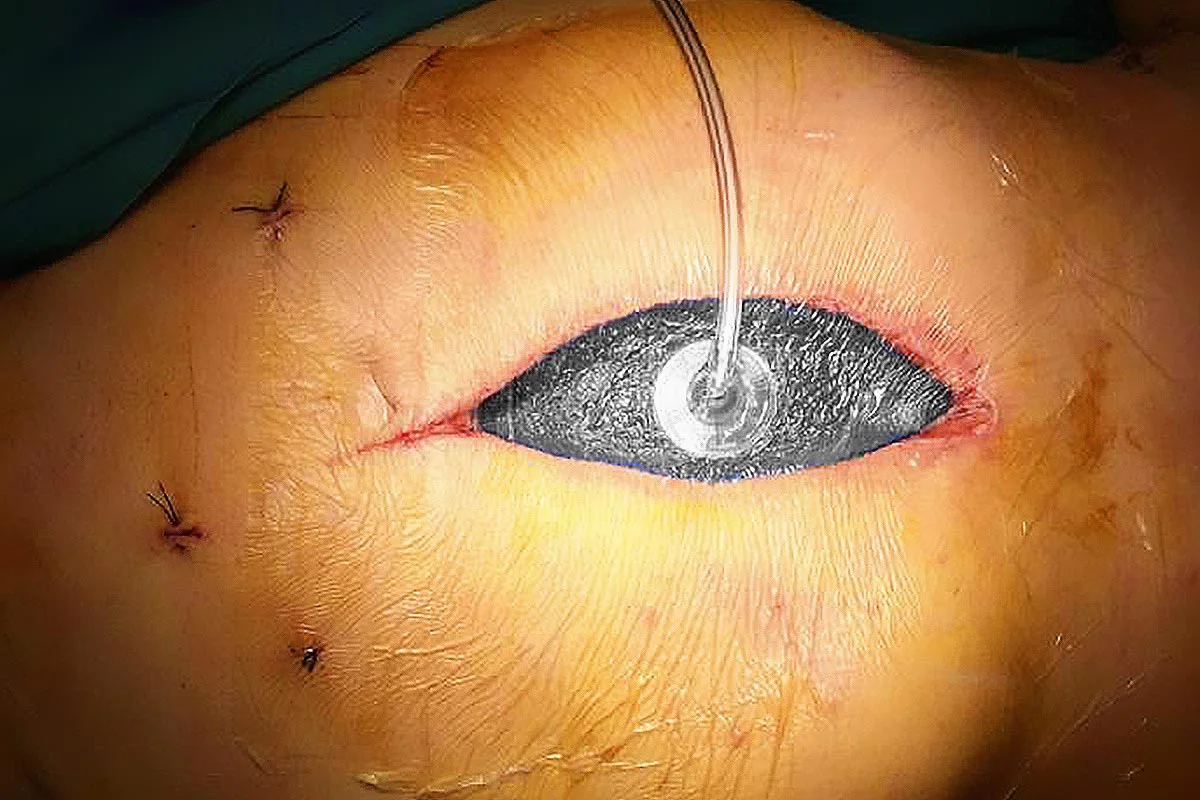
b. Passive vacuum aspiration (VAC Therapy)
This device is a "hero" in cases of open wounds. It suctions out fluids and brings the wound edges together 24 hours a day, dramatically accelerating closure.
c. Use of leather substitutes and silver dressings
We use advanced materials containing silver to kill bacteria locally, and collagen to stimulate skin regeneration.
3. What about the “shape of the wound” and the scar?
We understand that aesthetics are important, especially for women. Therefore, our treatment plan includes using scar therapy laser treatment as soon as the wound has healed to ensure the best possible cosmetic outcome.