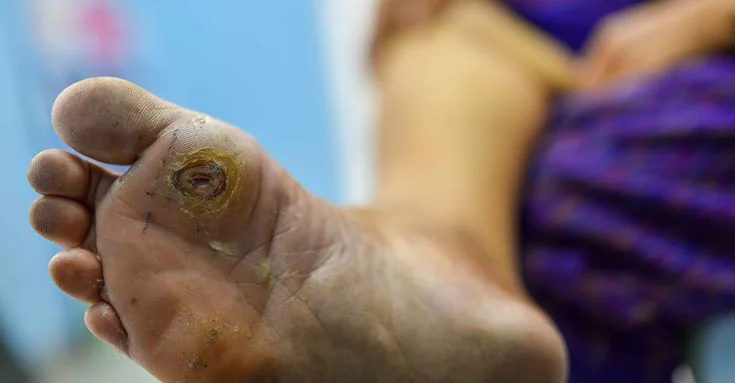
Did you know that 85% of lower limb amputations begin with a small wound on the foot that was not properly treated? At our center in Dar Al Salam Hospital (Amman - Seventh Circle), we believe that “amputation” is the last option, not the first.
⚠️ Danger signs (do not ignore them)
A common problem for diabetic patients is neuropathy, which causes loss of sensation in the feet. Contact us immediately if you notice: skin turning black (a sign of gangrene), foul-smelling discharge, or severe swelling in the leg.
1. How do we treat diabetic foot at our center?
Traditional treatments (iodine and gauze) are no longer sufficient in the age of modern medicine. We use advanced techniques to regenerate dead tissue.
- Microscopic wound cleaning (Debridement): Removing dead tissue with extreme precision without damaging healthy tissue, which stimulates the body to build new skin.
- Passive vacuum device (VAC Therapy): A revolutionary technique in which we install a special device that suctions fluids and inflammation from deep within the wound, and brings the edges of the skin closer together, thus accelerating healing by up to 300%.
- Improving blood circulation: We collaborate with vascular consultants to ensure blood reaches the foot, because simply put, “there is no healing without blood.”.
2. Do I need to be admitted to the hospital or is a home visit sufficient?
At JOMEDIX, we offer you two options depending on the assessment of your medical condition:
Home visit 🏠
We recommend it for the elderly and those suffering from superficial wounds or bedsores. Our nursing team will come to your home with sterile equipment.
Hospital Clinic 🏥
Essential for advanced cases requiring deep bone cleaning or the installation of complex VAC devices under direct supervision.
3. Why choose us?
We are strategically located in the heart of Amman (Seventh Circle), making us easily accessible. We have treated hundreds of cases where amputation was planned, and thanks to God, we have succeeded in saving them. Most importantly, we don't leave the patient after the session; we monitor the wound's progress daily.