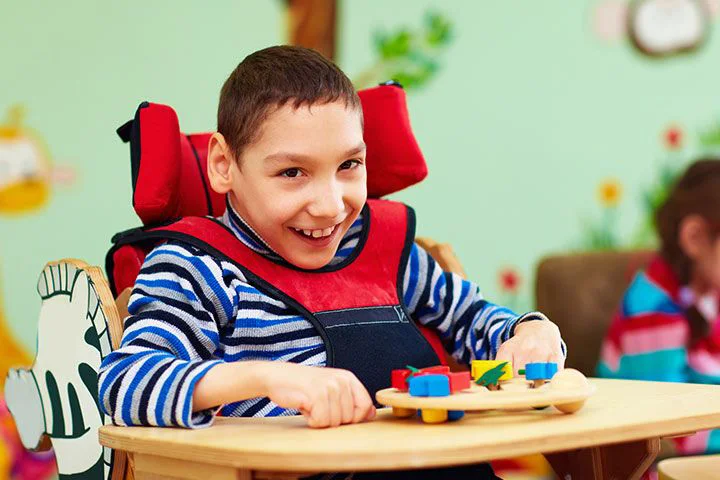
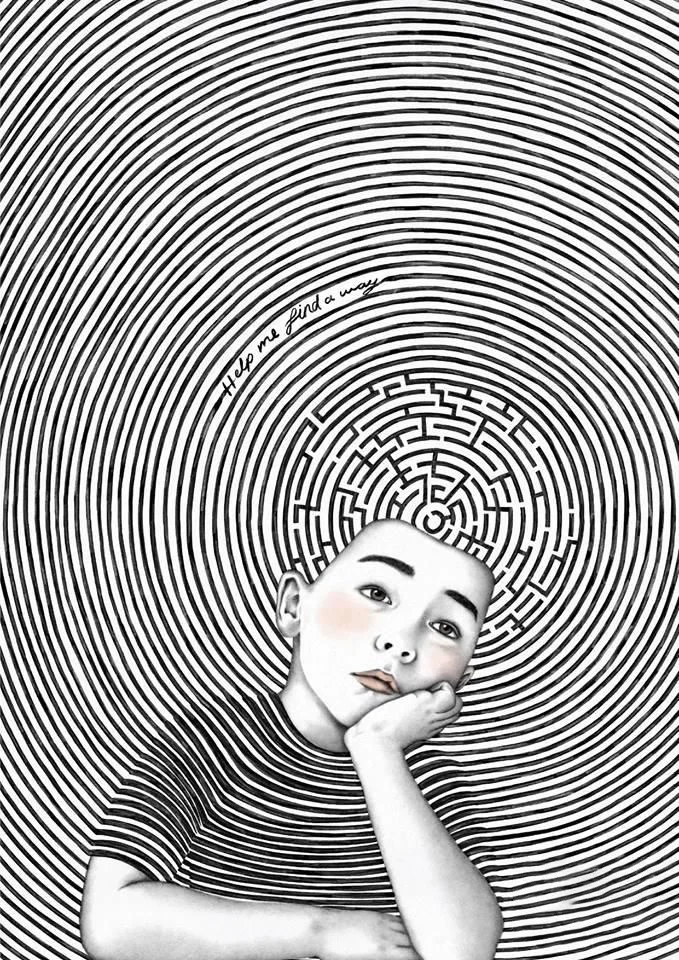
In our fast-paced world, it stands out Autism Spectrum Disorder (ASD) It is one of the most significant developmental challenges facing families and medical communities alike. It is not simply a medical diagnosis, but a complex condition that redefines how an individual perceives the world, how they interact with others, and how they process sensory information.
With the increasing rates of diagnosis worldwide, finding accurate and reliable information has become essential. Unfortunately, many myths and misinformation circulate, potentially causing unnecessary anxiety for parents or leading them down ineffective and costly treatment paths.
This comprehensive and extensive guide is based on the latest scientific research from reliable sources such as CDC and Global Health OrganizationIt aims to provide a clear and comprehensive picture of autism. We will delve into the possible causes, break down the symptoms across different age groups, explain the often-overlooked sensory challenges, and, most importantly, put an end to the rumors surrounding a “cure,” focusing on scientifically proven behavioral and rehabilitative interventions that aim to improve an individual’s quality of life and independence.
- 1. In-depth understanding of autism spectrum disorder
- 2. Causes and risk factors: What do we really know?
- 3. Symptoms and signs across age groups
- 4. The hidden dimension: sensory challenges and problems
- 5. Common associated disorders and health problems
- 6. The Diagnostic Journey: From Doubt to Certainty
- 7. The established fact: Autism is not a curable disease.
- 8. Behavioral Therapies and Interventions: A Roadmap for Improvement
- 9. The role of family and community: support and empowerment
- 10. Conclusion: A realistic message of hope
1. In-depth understanding of autism spectrum disorder
Autism spectrum disorder (ASD) is a complex neurodevelopmental condition that affects the brain's functional structure. Autism typically emerges within the first three years of a child's life and persists throughout their life. It primarily affects how an individual communicates, interacts socially, behaves, and has interests.
It is important to emphasize that autism is not a mental illness, nor is it the result of poor upbringing or adverse social circumstances. It is a difference in the way the brain functions, and this difference leads to challenges in certain areas, but it may also be accompanied by unique strengths in others.
The concept of “spectrum”: Why is every child different?
The term “spectrum” is used in the Diagnostic and Statistical Manual of Mental Disorders (DSM-5) to reflect the wide variation in the nature and severity of symptoms among those affected. This means that no two people with autism have exactly the same experience.
Some individuals may experience severe symptoms requiring significant and ongoing support in their daily activities, and may never develop spoken language. Others, on the other hand, may experience milder symptoms (formerly known as Asperger's syndrome), possessing average or above-average intelligence and good language skills, but facing considerable difficulty understanding subtle social cues, forming friendships, and coping with changes in routine.
A brief historical overview
Our understanding of autism has evolved considerably since it was first described by Leo Kanner in the 1940s as a rare form of childhood disorder. Around the same time, Hans Asperger described a similar set of symptoms but with enhanced language and cognitive abilities. For many years, misconceptions prevailed, such as the “refrigerator mother” theory, which blamed emotionally cold mothers for their children’s autism—a theory that has now been thoroughly disproven. Today, autism is recognized as a neurobiological disorder with strong genetic roots.
2. Causes and risk factors: What do we really know?
The most pressing question for every family receiving an autism diagnosis is: “Why? What is the cause?” The current scientific answer is that there is no single, specific, and direct cause. Autism is the result of a highly complex interaction between genetic predisposition and certain environmental factors that affect brain development in its early stages.
The pivotal role of genes and heredity
Research strongly suggests that genetics plays a major role in autism. Studies of identical twins have shown that if one twin has autism, the probability of the other twin also having autism ranges from 70% to 90%.
- Genetic mutations: Hundreds of genes have been identified that may be linked to an increased risk of autism. Some of these genes are inherited from the parents, while others may occur as de novo mutations in the fetus itself without being present in the parents.
- Genetic syndromes: Autism is closely linked to some well-known genetic disorders, such as Fragile X syndrome, Tuberous Sclerosis, and Rett syndrome.
Environmental and prenatal factors
While genetic predisposition plays a role, certain environmental factors can act as triggers, increasing the likelihood of a disorder developing in individuals with a genetic predisposition. It is important to distinguish between a “cause” and a “risk factor.” Environmental factors are not direct causes, but rather factors that increase the likelihood. These factors include:
- Advanced parental age: Studies indicate a slight increase in the risk of autism in children born to older parents (especially those over 40).
- Pregnancy and childbirth complications: Such as very premature birth (before week 26), severe low birth weight, or severe oxygen deficiency during birth.
- Exposure to certain medications and substances: The use of certain medications during pregnancy (such as valproic acid, used to treat epilepsy and bipolar disorder) has been linked to an increased risk. Research is also underway regarding the role of exposure to certain environmental pollutants, pesticides, and heavy metals, but the findings are still inconclusive and require further investigation.
Debunking myths (vaccines, etc.)
🚫 Dangerous myth: Vaccines cause autism
This is one of the most harmful and widespread myths. It began with a flawed and fraudulent study published in 1998, which was later retracted, and its author was stripped of his medical license. Since then, dozens of large-scale scientific studies involving millions of children worldwide have been conducted, all of which have unequivocally confirmed the findings. No relationship There is a link between vaccines (including the measles, mumps, and rubella (MMR) vaccine) and their components (such as thimerosal) and autism. Refusing to vaccinate children puts them at risk of fatal diseases and does not protect them from autism.
3. Symptoms and signs across age groups
Symptoms of autism typically become apparent between 12 and 24 months of age, but early signs may appear before then, or noticeable symptoms may be delayed until school age when social demands increase. The main symptoms fall into two categories: difficulties with communication and social interaction, and repetitive and stereotyped behaviors and interests.
Early symptoms in infants and young children (before 3 years old)
Monitoring these early signs (Red Flags) is crucial for early intervention:
At 6-12 months of age:
- Lack of or absence of social smiling (does not smile in response to a parent's smile).
- Poor eye contact (does not look into your eyes while breastfeeding or playing).
- Lack of response to the name when 9-12 months of age.
- Lack of cooing or vocalization.
- Avoid using simple gestures such as waving (bye-bye) or pointing at things.
At 12-24 months of age:
- Clear delay in speech (failure to pronounce single words by age 16 months, or two-word phrases by age 24 months).
- Loss of any previously acquired language or social skills (regression).
- Lack of interest in playing with other children, and a preference for playing alone.
- Lack of shared interests (he doesn't bring you a toy to show you, nor does he point to something that interests him).
- Unusual ways of playing (such as lining up the toys in a straight line instead of playing with them imaginatively, or focusing on one part of the game such as spinning the car wheels for hours).
Symptoms in school age and middle childhood
With the start of school, social challenges become more apparent:
- Great difficulty in making and maintaining friendships, and a lack of understanding of the rules of teamwork.
- Difficulty understanding other people’s feelings and points of view (weakness in “theory of mind”).
- Unusual speaking style (a monotone like a robot, a very loud voice, or repetition of words and phrases heard – echolalia).
- Difficulty understanding jokes, sarcasm, or figurative meanings of language (takes words literally).
- Intense and very limited interest in specific topics (such as memorizing train schedules, types of dinosaurs, numbers) and talking about them constantly without regard for the listener's interest.
- Strict adherence to routines and rules, and emotional breakdown or extreme anger when any small, unexpected change occurs.
Challenges in adolescence and adulthood
Some symptoms may improve with age and intervention, but the underlying challenges often persist:
- Persistent difficulties in complex social interaction and understanding subtle nonverbal cues.
- Feeling isolated and lonely, and an increased risk of anxiety and depression.
- Challenges in autonomy, time management, and organization (executive functions).
- Difficulties in obtaining and maintaining employment are not due to a lack of technical skills, but rather to challenges in the social work environment and sensory stimuli.
4. The hidden dimension: sensory challenges and problems
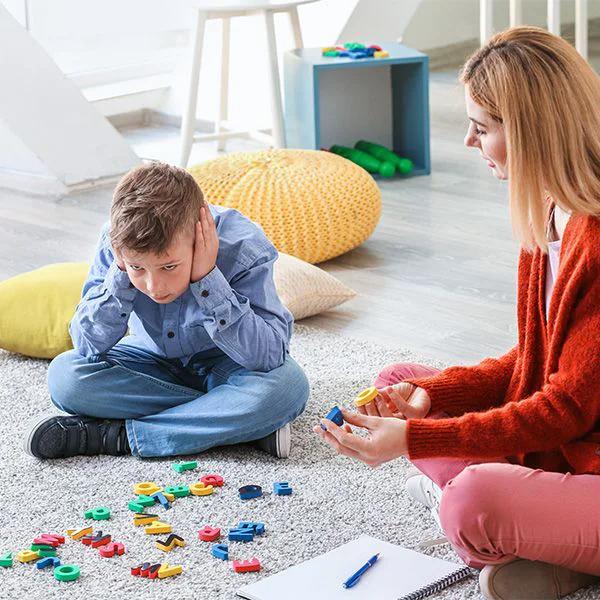
A significant part of the challenges faced by individuals with autism is not related to communication, but rather to how their brains process sensory information from the environment (hearing, sight, touch, smell, taste, balance, and body awareness). They may have hypersensitivity, hyposensitivity, or a combination of both.
- Hypersensitivity: An exaggerated reaction to sensory stimuli. Ordinary sounds may be painful, bright lights unbearable, the touch of certain clothing extremely unpleasant, or certain smells nauseating. This leads to avoidance behaviors such as covering the ears, fleeing crowded places, or being extremely picky about food.
- Hyposensitivity: Weak response to sensory stimuli. The child may seem to feel no pain, and may seek strong sensory stimuli such as spinning, jumping, bumping into things, touching everything, or making loud noises to feel his body and his environment.
Understanding these sensory challenges is vital, as many “problem behaviors” or breakdowns are actually a normal reaction to sensory stimuli that exceed a person’s tolerance.
5. Common associated disorders and health problems
Autism rarely occurs in isolation. It is often associated with other medical or psychological conditions that require separate attention and treatment.
- Attention deficit hyperactivity disorder (ADHD): It is very common for the two conditions to be combined.
- Anxiety disorders: Social anxiety in particular, which is very common among adolescents and adults with autism.
- Sleep disorders: Difficulty falling asleep or frequent awakenings during the night.
- Digestive system problems: Chronic constipation, diarrhea, or food allergies are common and may exacerbate behavioral problems due to pain or discomfort.
- Epilepsy and seizures: The incidence of epilepsy is higher among people with autism compared to the general population.
- Intellectual disability: A percentage of people with autism also have varying degrees of intellectual disability, while another percentage have average or above-average intelligence.
6. The Diagnostic Journey: From Doubt to Certainty
Diagnosing autism is not a simple process done with a blood test or scan. It is a clinical diagnosis based on careful observation of the child's behavior and developmental history, interviews with the parents, and the use of standardized assessment tools.
- Initial screening stage: During routine visits (especially at 18 and 24 months of age), the pediatrician uses quick questionnaires such as the M-CHAT-R to detect any risk signs that warrant a deeper evaluation.
- Comprehensive multidisciplinary assessment: If screening reveals a possibility, the child is referred to a specialist team which may include: a child psychiatrist, a child neurologist, a developmental psychologist, a speech and language therapist, and an occupational therapist.
- Golden diagnostic tools: Professionals use advanced tools such as the Autism Diagnostic Observation Schedule-2 (ADOS-2) and the Autism Diagnostic Interview-Review (ADI-R). These tools involve direct observation of the child's interaction in structured and semi-structured situations, and a very detailed interview with the parents about the child's history.
- Other cases excluded: Hearing and vision tests should be carried out to ensure that the problems are not caused by sensory impairment, and genetic testing may be ordered to rule out certain syndromes.
7. The established fact: Autism is not a curable disease.
Autism spectrum disorder is a chronic, lifelong condition. Currently, there is no medication, surgery, diet, or alternative treatment that completely cures it..
This reality may be painful for parents at first, but accepting it is the first step toward providing genuine and effective support for the child. Searching for a “miracle cure” wastes precious time that could be invested in proven behavioral interventions and exposes parents to financial and emotional exploitation by purveyors of bogus treatments (such as unlicensed stem cell therapy, hyperbaric oxygen therapy, or dangerous heavy metal removal protocols).
The available medications that psychiatrists may prescribe are not for treating autism itself, but for controlling severe accompanying symptoms that impair learning or pose a risk, such as extreme aggression, self-harm, hyperactivity, severe anxiety, or insomnia.
8. Behavioral Therapies and Interventions: A Roadmap for Improvement
Since healing is not the goal, the realistic and noble goal is Maximizing individual capabilities, increasing independence, improving quality of life, and reducing the challenges faced.. Early and intensive intervention (preferably before the age of 3-4) is the key to achieving the best possible results, when brain plasticity is at its peak.
Applied Behavior Analysis (ABA)
ABA is considered the most studied, widely used, and scientifically proven therapy for improving the skills of children with autism. It is based on the principles of behavioral learning.
- Basic principle: Behaviors that are reinforced (rewarded) tend to be repeated, and behaviors that are not reinforced or are ignored tend to become extinct.
- How it works: Complex skills (such as communication, self-care, and play) are broken down into very small, simple steps. The child is taught each step individually using prompting, which is then gradually reduced, with immediate reinforcement (praise, a favorite toy, or a beloved activity) provided upon correct response or behavior.
- Different technologies: ABA is not limited to sitting at a table (DTT – Discrete Trial Training), but includes more natural techniques such as training in the natural environment (NET – Natural Environment Training) where the child’s interests and everyday situations are used for learning.
- the goal: It is not about turning the child into a “robot,” but about teaching him functional skills that help him communicate, interact, and learn, and reducing behaviors that hinder him (such as severe tantrums or self-harm) by understanding the function of this behavior and teaching him acceptable alternatives.
Other essential treatments and interventions
- Speech-Language Therapy: It is very basic. It aims to improve the child's ability to understand and use language. For non-native speakers, it may focus on augmentative and alternative communication (AAC) methods such as picture communication (PECS) or tablets with communication software.
- Occupational Therapy (OT): It focuses on helping the individual achieve independence in daily living activities (such as dressing, eating, and using the toilet). It also plays a pivotal role in addressing sensory integration issues by providing a "sensory diet" that helps regulate the child's nervous system.
- Social Skills Training: It is typically conducted in small groups for older children or high-functioning adolescents. It aims to explicitly teach the rules of social interaction, such as how to initiate and maintain a conversation, read body language, understand humor, and resolve conflicts.
- Cognitive Behavioral Therapy (CBT): Highly effective for adolescents and high-functioning adults to help them understand and manage feelings of anxiety and depression, and change negative thinking patterns that lead to maladaptive behaviors.
- TEACCH model: It focuses on organizing the physical environment and activity schedule in a very visual and clear way to reduce stress and increase understanding in the child.
- DIR/Floortime model: It focuses on building emotional relationships and interaction through playing on the floor, following the child's lead and interests to expand the circle of his interaction.
9. The role of family and community: support and empowerment
The family is the cornerstone of any treatment plan. Parents are their child's first experts and must be key partners in setting goals and implementing strategies at home. Parent training is an integral part of successful programs, empowering them to use behavior modification and communication techniques in daily life.
Families of children with autism face immense psychological, financial, and social pressures. Psychological support for parents, support groups, and access to respite care are essential for maintaining family cohesion and mental well-being.
At the community level, we need to raise awareness to reduce stigma, and provide inclusive environments in schools, workplaces, and leisure activities that understand the needs of these individuals and accept their differences instead of trying to change them.
10. Conclusion: A realistic message of hope
The journey of autism is a long marathon, not a sprint. It is a journey full of challenges, but also full of moments of joy, progress, and achievements that may seem small to others but are gigantic to the child and their family.
While we emphasize that there is no cure, we equally emphasize the tremendous potential for improvement and development through evidence-based behavioral and rehabilitative interventions, and loving and understanding family and community support. Every person with autism has unique abilities, and our mission is to help them discover and utilize these abilities to live dignified, independent, and meaningful lives.
Are you worried about your child's development?
Don't wait. Early intervention makes a huge difference to your child's future. If you have any doubts, consulting a specialist is the first and most important step. We are here to help guide you in the right direction.
Book an appointment for your initial assessment nowDisclaimer: This article is for informational and awareness purposes only and is not intended to replace professional medical advice or diagnosis. Please consult qualified physicians and specialists for medical advice.