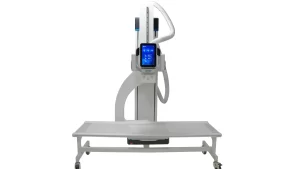
 In the era of modern medicineDiagnosis is no longer based solely on apparent symptoms.Medical imaging techniques have revolutionized our ability to see inside the human body with unprecedented precision. Among these techniques, [the following] stand out.Magnetic resonance imaging (MRI) and computed tomography (CT) are both indispensable diagnostic tools. While both techniques produce detailed images of internal body structures, they differ fundamentally in their operating principles, the types of tissues they image, and even the imaging equipment used. A thorough understanding of the different types of MRI and CT scanners and how to compare MRI and CT images is crucial for both physicians and patients.
This article is your comprehensive and technically rich guide, going beyond mere definition to delve into the details of magnetic field strength, the importance of radio frequencies in MRI, and the risks of radiation in CT scans. We will explore in detail the structural differences and clinical applications, and explain how the most appropriate technology is selected for diagnosing specific conditions, from brain injuries to assessing the health of soft tissues and blood vessels. Prepare yourself for a scientific journey to understand the technical foundation that makes these devices cornerstones of the global healthcare system.
Magnetic Resonance Imaging (MRI): Technical Principles and Classification of Device Types
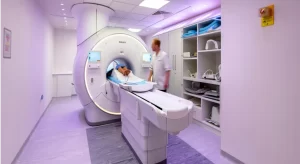
Magnetic resonance imaging (MRI) is based on the principles of quantum physics, using a strong magnetic field and radio waves to produce high-resolution images of the body's organs. The major advantage of MRI technology is its unique ability to distinguish soft tissues (such as the brain, spinal cord, muscles, and tendons) in greater detail than any other imaging technique, without exposing the patient to ionizing radiation. However, image quality and the efficiency of the machine depend primarily on the strength of the magnetic field.
Magnetic field strength (Tesla): The heart of MRI technology
The magnetic field of an MRI machine is measured in Tesla (Tesla). The stronger the field, the higher the signal quality and the faster the imaging speed, resulting in sharper images and greater anatomical detail. MRI machines are classified into main categories based on Tesla strength:
High-field MRI systems – 1.5T and 3.0T
These are the most common and widely used devices in hospitals and specialized centers.
- 1.5 Tesla (1.5T): It is considered the gold standard for clinical MRI. It offers an excellent balance between image quality and scan time, and is suitable for most routine scans, including imaging of the abdomen, pelvis, and bones.
- 3.0 Tesla (3.0T): It provides exceptional image quality, especially for imaging the brain, neural tissue, and small joints. Increased magnetic field strength results in a higher signal-to-noise ratio (SNR), which translates to sharper images and is very useful in advanced diagnostics such as functional magnetic resonance imaging (fMRI) and cerebral angiography.
These devices use superconducting magnets that require continuous cooling with liquid helium, making them bulky and expensive.
Low-field MRI systems – less than 1.0T
These include 0.2T, 0.5T, and 1.0T devices. These are often used in environments requiring less space or lower operating costs. While their image quality may not rival that of 3.0T devices, they offer an effective solution for imaging limbs or in cases where open MRI is needed for patients with claustrophobia.
Ultra-High-Field MRI Systems – 7.0T and above
These state-of-the-art devices are often used in academic research rather than routine clinical practice. They offer unprecedented microscopic resolution, allowing for the study of brain structure and neurons in unprecedented detail. These devices open new horizons for understanding complex neurodegenerative diseases.
Device architecture: Closed and open magnetic resonance imaging
In addition to field strength, **MRI machine types** differ in their physical design, which greatly affects the patient experience:
Closed-Bore MRI
It features a narrow tunnel design, the most common type in 1.5T and 3.0T devices. This provides optimal magnetic field uniformity, resulting in the highest possible image quality. However, this design can cause discomfort and anxiety for some patients.
Open MRI
It features an open space around the patient, which reduces anxiety and is ideal for children or overweight patients. The magnetic field strength in these devices is often lower (typically 0.6T to 1.0T), which slightly affects image accuracy, but modern, open devices up to 1.5T are now available, balancing comfort and quality.
Computed tomography (CT) scan: radiation, speed, and types of scanners

Computed tomography (CT) uses X-rays and sophisticated computing technology to create cross-sectional images of the body. Unlike magnetic resonance imaging (MRI), CT is characterized by its extremely fast scan speed and excellent ability to image dense tissues, such as bones and lungs, in addition to its primary use in emergency situations.
Matrix technology and the evolution of the number of rows (Slices)
Computed tomography (CT) scanners are classified based on the number of detector rows in the scanner gantry. The more rows, the faster the scanner and the more detailed the anatomical sections it can obtain.
Multi-slice/Multi-Detector CT scanners (MDCT)
This is the current standard in **CT imaging** technology. Instead of capturing a single slice per cycle, these devices capture multiple slices simultaneously.
- 16 and 64 slides: These are the most common types. They offer sufficient speed for efficient imaging of the chest and abdomen and minimize patient movement. The 64-slice scanner is best for coronary angiography (CT angiography).
- 128, 256 and 320 slides: It represents the latest generation. It is characterized by incredible speed, as it can cover an entire organ such as the heart or brain in a single rotation (less than one second), greatly reducing distortions caused by breathing or heart movement.
Increasing the number of slices is necessary to reduce radiation exposure time and to improve the quality of 3D images (3D Reconstruction).
Special types: Dual-Energy CT
This type represents a technological leap in the field of **computed tomography**. It uses two X-ray beams of different energy levels simultaneously. This allows for:
- Material discrimination: The ability to determine the chemical composition of elements within the body, such as distinguishing between iodine and calcium in arterial plaques.
- Reducing interference: Improving image quality by reducing interference caused by metal artifacts is beneficial for patients with artificial braces or joints.
- Measuring the stones: Accurately identifying the components of kidney stones helps determine the best course of treatment.
This technique greatly enhances the value of diagnostic **CT images** in complex cases.
Technical comparison: Magnetic resonance imaging (MRI) vs. computed tomography (CT)
Comparing MRI and CT scans is essential for understanding when and where each technique is used. The main differences are not in the overall image quality, but in the type of information each technique provides and the considerations related to patient safety.
Scientific principle: The basis for image contrast
The scientific principle is the fundamental difference that determines what each machine sees:
- MRI (Radio and Magnetic Resonance Imaging): It images hydrogen protons (which are abundant in water and fat) within soft tissues. The contrast in MRI images depends on the proton density and the time it takes for these protons to "relax" after being exposed to radio waves. This makes them very sensitive to any change in the water content within the tissues, such as swelling or tumors.
- CT (X-ray): It depicts the absorption of X-rays by tissues. Dense tissues, such as bone, absorb a large amount of radiation and appear bright white. Soft tissues absorb less and appear gray. This makes CT images excellent for examining solid structures and for the rapid assessment of brain hemorrhages.
Key considerations: radiation versus scan time
There is a clear trade-off between the two technologies in terms of safety and speed:
- MRI: It does not use ionizing radiation. However, the examination time is relatively long (30 to 60 minutes), and its use is prohibited for patients who have certain metallic devices (such as some older pacemakers or metallic neurostimulators).
- CT: It uses ionizing radiation, so the benefits must be weighed against the risks, especially for children and pregnant women. However, the scan takes only a few minutes, making it ideal for emergencies where speed is paramount.
Clinical applications: When do we choose MRI and when do we choose CT scanning?
Neuroimaging: Brain and Spinal Cord
Diagnosis of stroke and brain tumors
Imaging of the skeletal system and joints
Assessment of tendons, ligaments and soft tissues (MRI)
Complex fractures and bone deformities (CT)
The future of technology: Innovations in medical imaging devices
Functional magnetic resonance imaging (fMRI) and diffuse imaging (DTI)
Ultrafast CT: Full body scanning and reduced radiation dose
Patient and safety considerations: contrast, sedation, and claustrophobia
Comparison of contrast agents: gadolinium (MRI) and iodine (CT)
Dealing with claustrophobia: The role of open MRI technology
Conclusion: The integration of MRI and CT in modern diagnosis
A detailed technical analysis of **MRI and CT scan types** reveals that the two technologies are not competitors but complementary. Each offers a unique window into the body's internal structure and excels in specific areas. MRI is the undisputed champion in imaging soft tissues and avoiding radiation, while CT remains the fastest and most efficient tool in emergencies and for assessing skeletal and pulmonary structures. A shared understanding of **MRI and CT image comparisons** enables medical teams today to make rapid and accurate diagnostic decisions, saving lives and improving care outcomes. Health.